
AIR CONDITIONING & MVHR SPECIALISTS IN LONDON
Air conditioning installation, repair & maintenance in London.
A high-intent service hub for homeowners, landlords and businesses comparing installers, engineers, repair options, maintenance and system types.
AIR CONDITIONING INSTALLATION LONDON
Start with the building, not the brochure.
A useful survey should establish what rooms need conditioning, how they are used, likely heat gain, suitable indoor positions, where an outdoor unit could sit, pipe and cable routes, condensate drainage, electrical supply, noise considerations, maintenance access and the visual finish.
Residential installation
Bedrooms, living rooms, loft conversions, apartments, home offices, garden rooms and whole-home or multi-room systems.
Commercial installation
Offices, retail, restaurants, hotels, server rooms and multi-zone commercial property.
Which air conditioning system?
The right system depends on room count, available outdoor space, visual priorities, noise, controls and the way the property is used. Wall-mounted splits are common for single rooms; multi-splits can serve several rooms; cassettes and ducted systems can suit larger or more design-sensitive spaces; VRF/VRV becomes relevant on larger multi-zone commercial projects.
Wall-mounted split
Simple, efficient room-by-room solution.
Multi-split
Several indoor units with fewer external condensers.
Ceiling cassette
Commercial and open-plan distribution.
Ducted
Discreet grilles with concealed equipment.
VRF / VRV
Flexible zoning for larger buildings.
No-outdoor-unit options
Worth investigating where external equipment is restricted; suitability must be assessed per property.
Residential air conditioning London
Home installations are as much about comfort and discretion as raw capacity. Searches around bedroom air conditioning, loft air conditioning, apartment AC, home-office cooling, quiet systems and heating-and-cooling systems all point to the same decision: the equipment must suit the room and the property.
London property considerations
Period properties, flats, conservation constraints, limited external space and neighbour sensitivity can all influence outdoor-unit positioning, pipe routes and acoustic considerations. Planning requirements vary by property and location, so they should be checked for the actual address rather than assumed.
Commercial air conditioning London
Commercial projects need to account for occupancy, operating hours, internal heat gains, future maintenance access and downtime. Office, hospitality, retail and server-room cooling should not be treated as interchangeable applications.
Air conditioning engineers London
Customers searching for an air conditioning engineer are often already beyond research: they need a survey, diagnosis, repair or quotation. The enquiry should therefore capture the postcode, property type, equipment details if known, symptoms and photographs where useful.
Air conditioning repair London
Repair searches are symptom-led. A good fault page should help customers recognise the problem without pretending to diagnose it remotely.
Not cooling or heating
Water leaking
Error code displayed
Weak airflow
Unusual noise or vibration
System trips or switches off
Bad odour
Outdoor unit not running
Intermittent performance
Air conditioning servicing & maintenance London
Servicing intent ranges from a homeowner wanting a one-off clean and check to facilities teams needing planned maintenance across multiple assets. The page should distinguish those journeys clearly.
One-off servicing
Useful for residential systems, pre-season checks, performance concerns and systems without an existing maintenance arrangement.
Planned maintenance
Structured visits for commercial and managed property, with asset visibility, identified defects and remedial priorities.
Replacement, upgrades & controls
Replacement may make sense when equipment is unreliable, inefficient, poorly sized or no longer suited to the space. A survey should compare repair versus replacement rather than assume a new system is always the answer. Modern controls can also improve usability and zoning.
How much does air conditioning cost in London?
There is no responsible single price without knowing the room, system type, access, electrical requirements, pipe route, outdoor-unit position and installation complexity. The useful next step is a site survey and written quotation based on the actual property.
What should an air conditioning installation survey include?
Installation quality is decided before drilling starts. A useful survey should confirm the rooms to be conditioned, likely heat gain, indoor-unit position, outdoor-unit location, pipe and cable routes, condensate drainage, electrical requirements, maintenance access and the expected finish.
Heat-load assessment
Floor area alone is not enough. Large windows, roof exposure, orientation, occupancy, computers, kitchens and insulation can change the load. Oversizing is not a substitute for assessment.
Pipe runs and condensate drainage
Split systems need refrigerant pipework, controls and a condensate route. If gravity drainage is not practical, a pump may be needed. The route affects appearance, noise and future maintenance, so it should be agreed before installation.
Outdoor condenser position
The condenser needs free airflow and service access. Noise, visual impact, structural support and distance from neighbouring windows all matter, particularly in dense London property.
REAL COMFORT PROJECTS
Residential work without the stock-photo gloss.
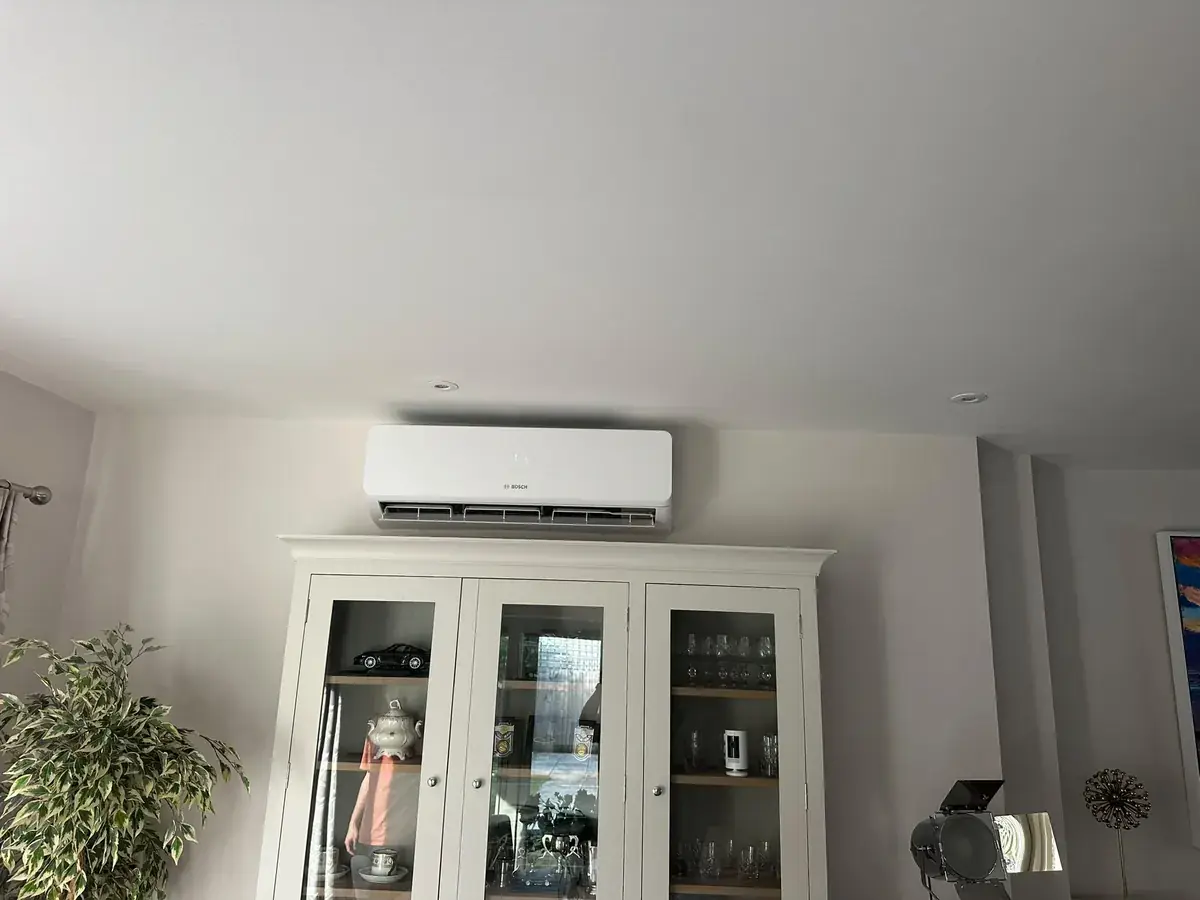
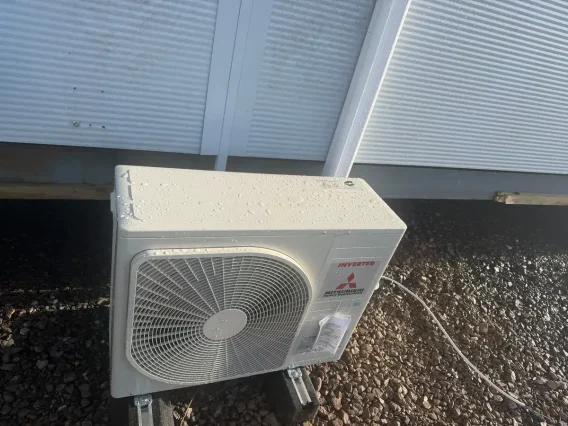
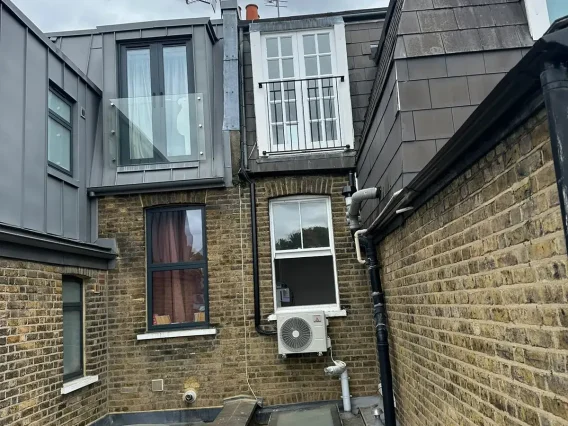
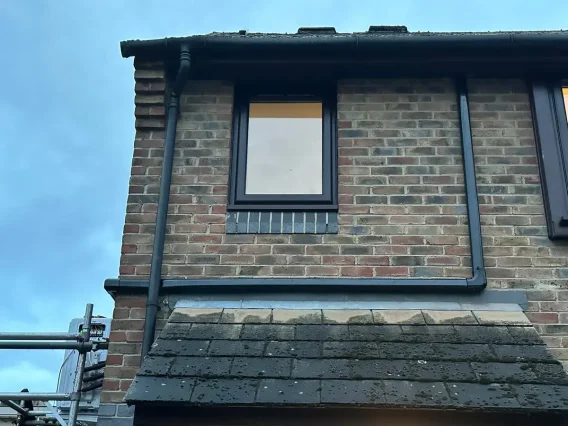
Wall position, external space, pipe routes and how equipment sits alongside the room matter more than generic lifestyle imagery.
Comfort project · London installation detail
Comfort project · London installation detail
Comfort project · London installation detail
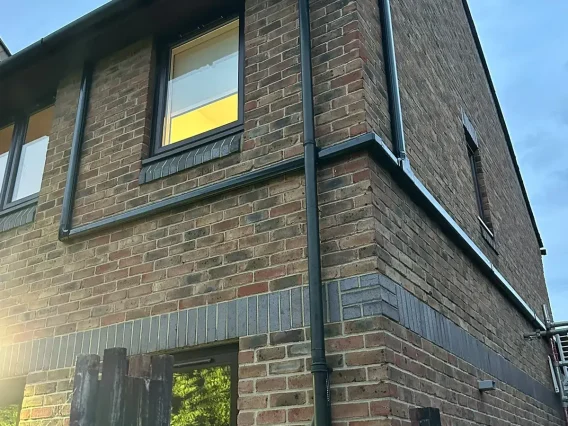
Comfort project · London installation detail
Air conditioning for bedrooms, lofts, flats and home offices
Top-floor flats and loft conversions can become especially uncomfortable because heat builds through roofs and glazing. Bedrooms need quiet operation and gentle airflow; home offices add equipment heat; apartments can have balcony, lease and façade constraints.
Bedroom AC
Low noise, correct sizing and airflow away from the bed.
Loft AC
Roof exposure, glazing and potentially awkward external routes.
Apartment AC
External space, lease, façade and neighbour considerations.
Home-office AC
Daytime occupancy, computer heat and desk position.
Living-room AC
Open-plan layouts, glazing and connected kitchens can increase load.
Garden-room AC
Lightweight construction and glass can create rapid summer and winter swings.
Office, hotel, restaurant, retail and server-room air conditioning
Commercial systems should be selected around the activity in the building. Offices need zoning and draught control; restaurants combine customer comfort with high internal heat gains; hotels need multiple zones and service access; retail needs trading continuity; server rooms need cooling designed around equipment heat and the consequence of failure.
Air conditioning repair symptoms explained
AC not cooling
Incorrect mode, blocked filters, airflow problems, icing, controls and refrigeration faults are among the possibilities. Diagnosis matters more than lowering the thermostat.
AC leaking water
Drainage restrictions, condensate pumps, icing and installation fall can be relevant. Stop the unit if water threatens electrics or finishes.
AC not turning on
Check the controller and obvious power supply first. Repeated electrical trips or a dead system need investigation.
Error codes
Record the exact code and model. Avoid repeated resets that hide an intermittent fault.
Bad smell
Dirty filters, moisture, drains and contamination can contribute. A persistent odour deserves inspection.
Outdoor unit not running
The cause can range from controls to electrical or system faults. It should be diagnosed rather than assumed to need replacement.
Air conditioning servicing: what should buyers expect?
Servicing intent ranges from a homeowner wanting a one-off check to a facilities team managing many assets. The scope should reflect equipment type, hours of use and environment. Filters, coils, drains, controls, temperatures, airflow and visible condition are typical areas to assess, while commercial sites may also need asset records and planned remedial work.
Air conditioning maintenance contracts London
A maintenance contract should make the visit frequency, assets covered, reporting, exclusions, reactive-callout arrangements and remedial quotation process clear. A server room or hospitality site operating long hours may need a different programme from lightly used residential equipment.
Repair or replace?
Replacement is not automatically the right answer because a unit is old. Consider the diagnosed fault, repair cost, reliability history, efficiency, refrigerant availability, condition of other components and whether the existing system is still appropriate for the room or building.
Air conditioning installation cost in London
Searchers understandably want a number, but responsible pricing depends on the project. Room count, capacity, indoor and outdoor positions, pipe length, drainage, electrical work, access, system type and making good can all change the cost. The useful comparison is a written quotation with a defined scope.
Planning, listed buildings and conservation areas
External equipment can raise planning, lease or freeholder questions. The correct answer depends on the property and proposed location. Do not assume that advice for one London flat applies to another building a few streets away.
What should an air conditioning installation survey include?
Installation quality is decided before the engineer arrives with tools. The survey should make the proposed indoor and outdoor positions clear, identify how pipework and condensate will travel, confirm electrical requirements and flag access or making-good issues. If those details are vague at quotation stage, they often become expensive or visually awkward decisions on installation day.
Heat-load assessment
Room area alone is not enough. Large windows, south- or west-facing glazing, roof exposure, occupancy, computers, kitchen equipment and insulation can all change the cooling requirement. Oversizing is not a substitute for assessment: an unnecessarily large unit can cycle poorly and distribute air badly.
Pipe runs and condensate drainage
Every split installation needs a route for refrigerant pipework and electrical/control connections. The indoor unit also produces condensate in cooling mode. Where gravity drainage is not practical, a condensate pump may be required. The route affects appearance, sound and future maintenance, so it should be agreed before work starts.
Outdoor condenser position
The condenser needs free airflow and access for future servicing. It also creates sound and rejects heat, so squeezing it into an enclosed balcony corner or placing it immediately beside a neighbour’s bedroom window can create avoidable problems.
Electrical requirements
The electrical arrangement depends on the selected equipment and installation. It should be confirmed as part of the scope rather than assumed after the AC equipment has been ordered.
Air conditioning for bedrooms, lofts, flats and home offices
London residential demand is driven heavily by rooms that overheat. Top-floor flats and loft conversions can become particularly uncomfortable after several sunny days because heat builds through roofs and glazing.
Bedrooms
Prioritise quiet operation, correct sizing and airflow that does not blow directly across the bed.
Lofts
Account for roof exposure, glazing, limited wall space and potentially longer routes to an outdoor unit.
Flats & apartments
External space, lease conditions, façades, balconies, planning and neighbour noise may influence the solution.
Living rooms
Open-plan layouts and large glazing can create higher loads and more demanding air distribution.
Home offices
Computers and all-day occupancy create additional heat; low noise and desk position matter.
Garden rooms
Lightweight construction and large areas of glass can create rapid temperature swings in summer and winter.
Office, restaurant, hotel, retail and server-room air conditioning
Commercial air conditioning should be designed around the activity in the building, not simply its floor area.
Office AC
Open-plan areas, meeting rooms, occupancy and zoning
Restaurant AC
Kitchen heat, dining comfort and long opening hours
Hotel AC
Guest rooms, common areas and multi-zone control
Retail AC
Trading continuity, lighting loads and customer comfort
Server-room AC
Continuous equipment heat and higher consequence of failure
Managed buildings
Asset visibility, access planning and repeatable maintenance
REAL COMFORT PROJECTS
The practical side of a polished installation.
External units, access, routing and commissioning are part of the finished job too.
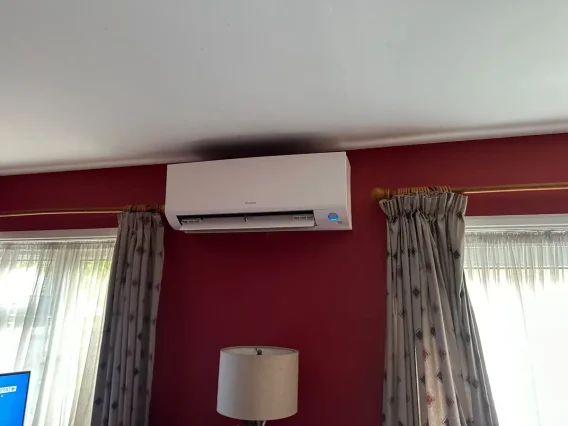
Comfort project · London installation detail

Comfort project · London installation detail
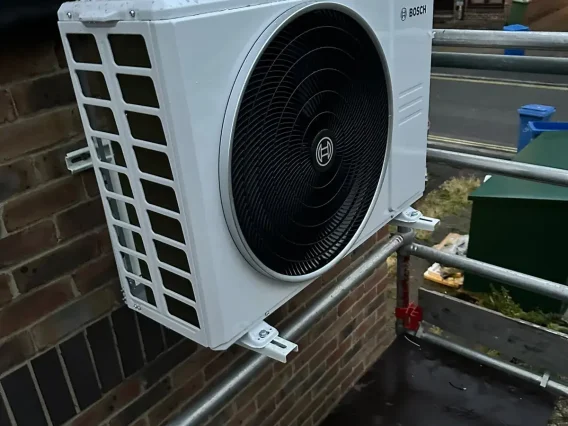
Comfort project · London installation detail
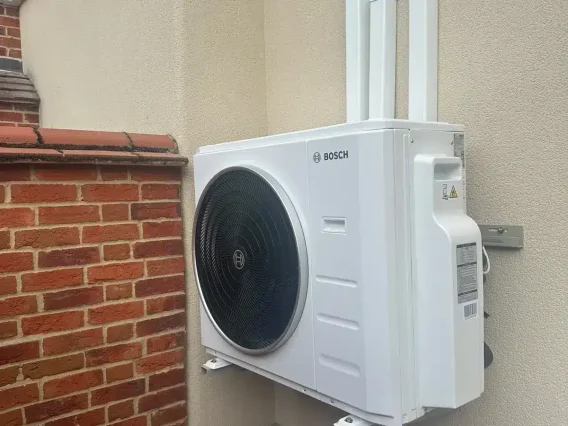
Comfort project · London installation detail
Air conditioning repair: what the symptoms can tell you
Air conditioner running but not cooling
Confirm the controller is in cooling mode and the set temperature is below room temperature. If airflow is weak, the indoor coil is icing, the outdoor unit is not operating or performance has suddenly dropped, the cause needs diagnosis. Continually lowering the set point does not fix a mechanical or refrigeration fault.
Water leaking from the indoor unit
Water can be associated with blocked or poorly routed condensate drainage, pump failure, icing or installation issues. If the leak could reach electrics or damage finishes, stop the system and arrange inspection rather than allowing it to continue dripping.
Air conditioner not turning on
Check the obvious user controls and whether power is available, but repeated breaker trips, fault codes or a system that immediately shuts down should not be repeatedly reset without understanding why.
Weak airflow
Dirty filters are one possibility, but fan problems, coil condition, duct restrictions and other faults can produce similar symptoms. If filter cleaning does not restore normal airflow, further diagnosis is needed.
Noisy or vibrating AC
A change in sound matters more than the fact that an air conditioner makes some noise. Rattling panels, fan contact, vibration, pump noise and outdoor-unit problems can each have different causes.
Bad smells from air conditioning
Musty odours can point to moisture, contamination or drainage issues. Burning or electrical smells should be treated more urgently and the equipment switched off pending inspection.
What is included in an air conditioning service?
The exact scope depends on system type, condition and whether the visit is residential or commercial. A useful service is not simply a visual glance at the unit.
Filters
Inspect and clean or replace as appropriate to the equipment and condition.
Coils & airflow
Look for contamination and conditions that can reduce heat transfer or airflow.
Condensate
Check drainage and pumps where fitted, particularly if there is evidence of leaking.
Controls
Confirm operating modes, set points and obvious control issues.
Outdoor unit
Inspect condition, airflow around the condenser and signs of damage or obstruction.
Performance
Consider whether the system is operating as expected and identify faults requiring separate remedial work.
How often should air conditioning be serviced?
There is no sensible single interval for every installation. A bedroom system used mainly during hot weather has a different duty from restaurant, office or server-room equipment operating for long hours. Environment, manufacturer requirements, occupancy and criticality should inform the maintenance plan.
Air conditioning in flats, listed buildings and conservation areas
London property constraints can affect external equipment. Flats may have lease or freeholder conditions; listed buildings and conservation areas can have tighter controls over alterations; some façades or balconies may not be suitable for a conventional condenser. These issues should be checked against the actual property rather than answered with a blanket promise.
Can air conditioning be installed without an outdoor unit?
Internal or no-outdoor-unit air conditioners exist and can be useful where a conventional external condenser is not practical or permitted. They are not automatically the best substitute for a split system: installation openings, capacity, sound, room layout and visual impact still need assessing.
Quote a multi-room London installation from one room measurement and a photograph. The route, external position, drainage and electrical scope can change the job completely.
How much does air conditioning installation cost?
A credible quotation needs the number and size of rooms, system type, indoor and outdoor positions, pipe route, drainage, electrics, access and finishing requirements. Headline prices that ignore those variables are difficult to compare fairly. Compare written scopes describing what equipment and installation work are actually included.
Repair or replace an old air conditioner?
Consider the diagnosed fault, age, reliability history, overall system condition, efficiency, suitability for the space and likely future repair exposure. A repair can be sensible when the fault is isolated and the equipment remains appropriate. Replacement becomes more compelling when failures are repeated, the system is unsuitable or major expenditure would still leave an ageing installation with other weaknesses.
Air conditioning FAQs
Capacity should be based on heat load rather than floor area alone. Glazing, orientation, roof exposure, occupancy and equipment can materially change the requirement.
Running cost depends on equipment efficiency, set temperature, hours of use, room heat gain and electricity tariff. Correct sizing and sensible controls matter.
Internal systems exist for some applications and can be useful where external equipment is restricted, but they have different installation requirements and are not the best answer for every property.
Sometimes, if airflow, access, heat rejection, noise, structure, lease conditions and appearance are all acceptable. Enclosed balconies can be problematic.
Restricted airflow and refrigeration faults are among the possible causes. Switch it off if ice is building and arrange diagnosis rather than repeatedly forcing it to run.
Filters, moisture, drains and contamination can contribute. Persistent odours should be investigated and the system cleaned or repaired as appropriate.
There is no single interval for every building. Usage, environment, equipment type and operational risk should determine the programme.
In principle, existing systems can be assessed and serviced subject to equipment condition, access and the scope agreed after inspection.
Quiet operation, correct capacity and sensible indoor/outdoor positioning are usually more important than choosing a unit by brand alone.
Many modern split systems operate as reversible heat pumps, providing both cooling and heating.
It depends on the property, equipment position and local constraints. The actual address should be checked rather than relying on a blanket answer.
The first step is diagnosis: share the manufacturer, model, fault symptoms and photos if available.
AIR CONDITIONING BUYER GUIDE
Installation details that change the finished result
Two quotations can name similar equipment and still describe very different installations. The difference is often hidden in access, pipe routes, drainage, electrical work, controls and finishing. Before accepting a quotation, understand where the indoor unit will sit, where the condenser will go, how the services will travel between them and what will remain visible when the engineer leaves.
How should the system be sized?
A sensible assessment considers room dimensions together with glazing, orientation, roof exposure, insulation, occupancy and heat-producing equipment. Server rooms, kitchens and sunny lofts can carry much higher loads than ordinary bedrooms. Choosing a bigger unit without understanding the load is not a substitute for sizing.
What makes a neat installation?
Neat work starts with route planning. Pipework and cable containment should follow a deliberate path; condensate should have a reliable fall or properly considered pump arrangement; penetrations should be positioned carefully; and equipment should remain accessible for service. The most visually expensive mistake is often deciding the route after equipment has already been mounted.
Where should the outdoor condenser go?
The condenser needs airflow, structural support and service access. It also rejects heat and makes sound. London terraces, balconies, lightwells, roofs and close neighbouring windows can make the external location a design problem in its own right. A position that is convenient to install is not automatically the best position to live with.
What should be agreed before work starts?
Working hours, access, furniture protection, drilling, containment colour, external route, drainage, electrical responsibility, making good, commissioning and waste removal should all be clear. Commercial clients should also agree how work will be phased around staff, customers or trading hours.
Domestic air conditioning: choosing by room
Homeowners rarely need “air conditioning for a house” in the abstract. They need a bedroom to sleep comfortably, a loft that becomes unusable in summer or an open-plan room that stores heat behind large glazing. Treating each room as a separate comfort problem produces better decisions.
Bedroom AC
Priorities include low sound, low fan-speed performance and an airflow direction that does not blow directly across the bed. If the condenser is close to a bedroom window, outdoor sound becomes equally important. A small room can still have a high load if it is at roof level or has strong afternoon sun.
Living rooms and open-plan spaces
Large glazing, connected kitchens and high occupancy can make these rooms more demanding. The indoor position should distribute air across the occupied zone rather than short-circuiting into a nearby hallway. Where one large space connects to other rooms, be realistic about what a single indoor unit can and cannot control.
Lofts and top-floor flats
These spaces can remain hot after outside temperatures fall because roofs and building fabric release stored heat. The survey should consider rooflights, dormers, insulation and the route to external equipment. Access for installation can also be more complex at upper levels.
Multi-room homes
Separate splits offer simple independence but require more outdoor equipment. Multi-splits can reduce condenser count but connect several rooms to one system. Ducted systems can provide a discreet finish where the building has suitable void space. The right answer depends on layout, control expectations and available external space.
Commercial AC: match the system to the business
Commercial cooling is not one market. Offices need zoning and quiet operation; restaurants have high internal gains and long hours; hotels have many independently occupied rooms; shops cannot easily close for maintenance; server rooms carry equipment loads around the clock. The design and maintenance strategy should reflect those differences.
Office air conditioning
Meeting rooms can overheat quickly when occupied, while open-plan areas may need several zones. Consider staff density, computers, solar gain, partition changes and whether different teams work different hours. Controls should be understandable enough that staff do not fight the system with conflicting settings.
Restaurant and hospitality AC
Dining areas experience changing occupancy and heat from lighting, people and nearby kitchens. Equipment must be maintainable without creating unnecessary disruption during service. Airborne contamination in hospitality environments can also influence maintenance needs.
Retail air conditioning
Customer comfort matters, but so does trading continuity. Maintenance access, door openings, lighting loads and changing shop layouts can all affect performance. A system that cannot be serviced without blocking the sales floor creates an avoidable operational problem.
Server-room cooling
IT equipment generates heat continuously. Capacity should be based on equipment load and expected growth rather than room area alone. Because cooling failure can threaten hardware and services, monitoring, resilience and rapid fault escalation may be more important than in ordinary comfort-cooling spaces.
Repair diagnostics: what to tell the engineer
The best repair enquiry describes what changed. Say whether the unit powers up, whether the indoor fan runs, whether the outdoor unit starts, whether an error code is shown, whether water is leaking and whether the problem affects one unit or several. Photos of the model label and controller can be more useful than a long description of the brand.
Not cooling
Do not assume the system needs refrigerant. Incorrect mode, dirty filters, airflow problems, control faults, sensor issues, outdoor-unit faults and refrigeration problems can all produce poor cooling. Diagnosis should establish the cause before parts or refrigerant are added.
Leaking water
Condensate leaks can damage finishes quickly. If safe, stop the unit and note whether the leak appears only in cooling mode, whether a pump can be heard and whether the unit has recently iced. Do not remove electrical covers to investigate.
Repeated electrical trips
A breaker that trips repeatedly is a warning, not an inconvenience to reset indefinitely. Stop repeated resets and arrange proper electrical and equipment diagnosis.
Maintenance and PPM: what good looks like
Planned maintenance should create useful information. A commercial client should know what assets were attended, what defects were found, which issues are urgent and which can be planned. A homeowner should leave knowing whether the system is operating normally and what maintenance is likely to be needed next.
Regulatory context
Some refrigeration work is regulated and requires appropriately qualified personnel. Commercial building owners can also have separate obligations depending on system size and building circumstances. Those obligations should be checked against current official guidance for the actual equipment rather than reduced to a generic marketing claim.
Larger-system energy inspections
Air-conditioning energy-inspection requirements are distinct from routine servicing. Larger systems can fall within statutory inspection regimes. Building operators should verify the current threshold and inspection requirements rather than assuming a maintenance visit replaces a required energy inspection.
Planning, leases and London property constraints
Government rules and local planning context can change, and flats can have private lease or freeholder restrictions in addition to planning law. Listed buildings and conservation areas need particular care. Check the actual property and proposed external alteration before committing to equipment positions.
Air conditioning without an outdoor unit
Where an external condenser is difficult, internal systems can be worth considering. They usually still need openings through an external wall and have different acoustic and performance characteristics. They solve a particular constraint; they are not automatically better than a conventional split.
Cost and quotation questions
Installation cost is driven by the system and the building. Number of rooms, equipment type, route length, outdoor access, drainage, electrics, controls, ceiling work and making good all matter. Ask for a quotation that describes the scope clearly enough to understand why the number is what it is.
Why very cheap quotes can be hard to compare
A low headline price may exclude electrical work, pumps, access equipment, making good, controls or longer pipe runs. That does not automatically make the quote bad, but the exclusions need to be visible. Compare like with like.
Additional air-conditioning FAQs
Yes, but glazing and solar gain can significantly increase the load. The system should be sized for actual room conditions.
Ducted systems can create a more concealed finish where there is suitable ceiling or service space. High-wall and cassette units remain visible to different degrees.
Multi-split and larger multi-zone systems can connect several indoor units to outdoor equipment. The exact arrangement depends on the product and project.
Moisture, contamination or drainage conditions can contribute to odours. Persistent or burning smells should be investigated rather than masked.
Icing can be associated with airflow or refrigeration problems. Switch the system off if heavy ice forms and arrange diagnosis.
Yes. Early coordination can make routes, ceiling integration, electrics and controls easier than adding the system after finishes are complete.